A Surprising Discovery in My Grandfather’s Workshop: How One Forgotten Tool Revealed a Piece of Everyday History
There is a unique feeling that comes from stepping into an old workshop. Unlike modern workspaces filled with the latest equipment and neatly organized storage systems, traditional workshops often carry decades of memories within their walls. Every drawer, shelf, and toolbox has a story to tell. Layers of dust may cover forgotten items, but beneath them lie reminders of past projects, practical skills, and the ingenuity of earlier generations.
Recently, I spent an afternoon helping my grandfather organize his workshop. What seemed like a simple cleaning project quickly turned into a fascinating journey through history. As we sorted through boxes, old tools, and containers filled with hardware, I came across an unusual metal object tucked away behind a toolbox. Its shape was unlike anything I had seen before, and it immediately sparked my curiosity.
At first glance, the object appeared complicated. Made entirely of metal and built with remarkable durability, it looked as though it belonged to a machine or some specialized piece of industrial equipment. The more I examined it, the more questions I had. What was it used for? Why had it been kept all these years? Was it part of a larger device, or did it serve a purpose on its own?
As it turned out, the answer was far simpler than I expected. Yet the story behind the tool revealed much more than its practical function. It offered insight into how people worked, solved problems, and approached everyday tasks before many modern conveniences existed.
The Charm of Traditional Workshops
Older workshops possess a character that is difficult to replicate. They are often filled with tools collected over decades, each one serving a specific purpose. Many of these items were built during a time when durability mattered more than appearance. Manufacturers expected tools to last for years, sometimes even generations.
Walking into my grandfather’s workshop felt like stepping into a living museum. Wooden shelves lined the walls, stacked with containers holding screws, nails, bolts, and washers of every size imaginable. Handwritten notes were tucked into manuals, while faded calendars from years past still hung in place.
Unlike many modern storage spaces, where old items are quickly discarded and replaced, this workshop reflected a lifetime of practical experience. Every tool had been saved for a reason. Some were still used regularly, while others remained as reminders of projects completed long ago.
The workshop represented more than a place to build and repair things. It was a record of decades of learning, creativity, and hard work.
Beginning the Cleanup Project
The goal of our cleanup was straightforward. Over the years, tools, spare parts, and materials had accumulated, making it difficult to find what was needed. My grandfather wanted to reorganize the space and create room for future projects.
We started by sorting shelves and opening boxes that had not been touched in years. Some contained familiar items, while others revealed objects whose purposes were not immediately obvious.
As often happens during cleanup projects, progress slowed whenever we discovered something interesting. Each unusual item led to questions, stories, and conversations. Before long, the project became less about organizing and more about exploring the history hidden inside the workshop.
Among all the objects we uncovered, one stood out more than the rest.
An Unusual Metal Tool Appears
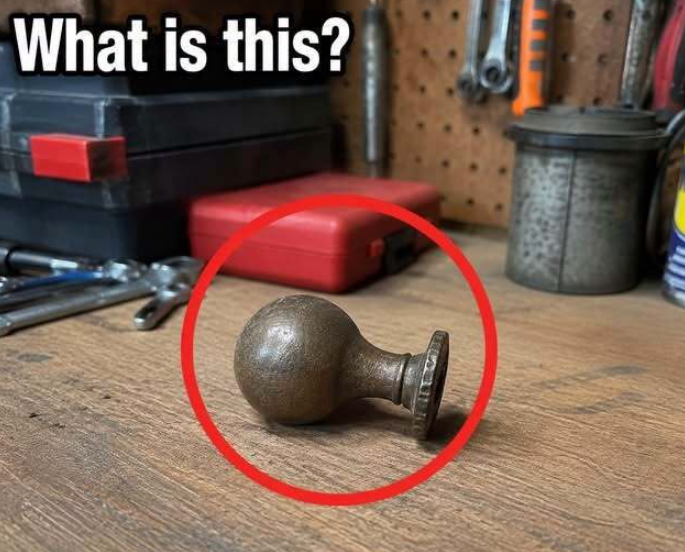
While moving several containers from an upper shelf, I noticed a small metal object resting behind an old toolbox. It looked sturdy and well-made despite its age.
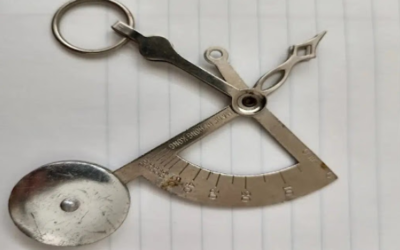
The tool featured several curved sections extending from a central frame. Its design seemed deliberate and carefully engineered, yet its purpose was not immediately clear. I turned it over in my hands, searching for clues that might reveal how it had been used.
My first thought was that it belonged to a machine. The workshop contained various pieces of vintage equipment, so it seemed reasonable to assume the object had once been part of a larger mechanism.
The more I studied it, however, the less certain I became.