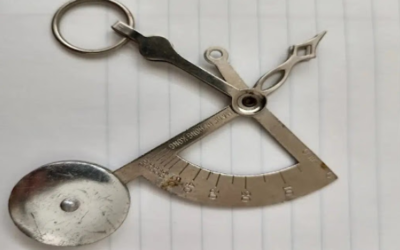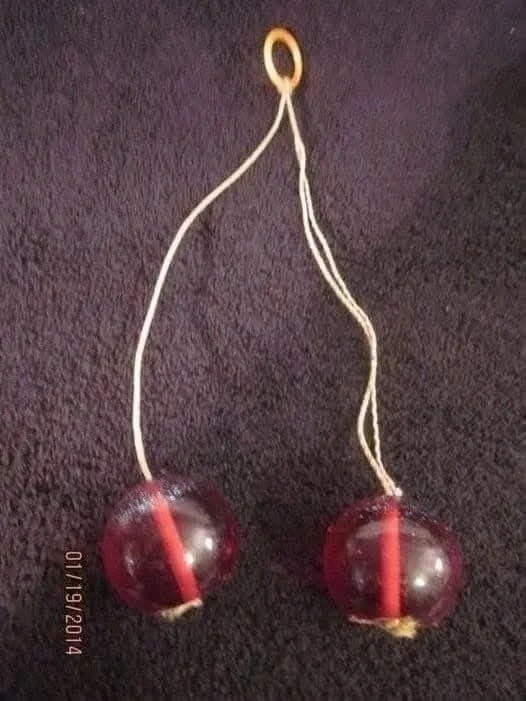
Neither do most people. Nearly ninety percent of those who see it for the first time have no idea what they're looking at. The mysterious object that sparked so much curiosity was something that many adults were once very familiar with, but many young people had never encountered. The answer was Clackers.
Clickers, also known as Lik Klaks, were one of the most popular toys of the early 1970s and are still a nostalgic memory for vintage toy collectors today. At first glance, the toy seems simple, even mundane. It consists of two hard plastic balls attached to the end of a string with a small ring or handle in the middle. The fun comes from swinging the toy up and down so that the balls repeatedly hit each other, making a loud and rhythmic clicking sound that can be heard from across the street.
The game was invented in 1969 by the famous toy company Wham O. This company was responsible for some of the most iconic toys of the twentieth century, including the hula hoop, the Frisbee, and the Superball. When Clackers were released to the public, their popularity skyrocketed almost overnight. Kids everywhere begged their parents for a pair, and playgrounds quickly filled with the unmistakable clack-clack sound that echoed through the air. In the first year alone, Wham O sold over ten million Clackers, making them one of the most successful toy introductions of the era.
One of the game's appeals was how difficult it was to master. Beginners struggled to keep up with the rhythm, often cracking their knuckles. More skilled players could create complex patterns and speeds, turning the game into a kind of performance. Informal competitions were even held among children to see who could click the longest without losing control of the game. For many, the clicker was not just a toy, but a symbol of skill and patience.