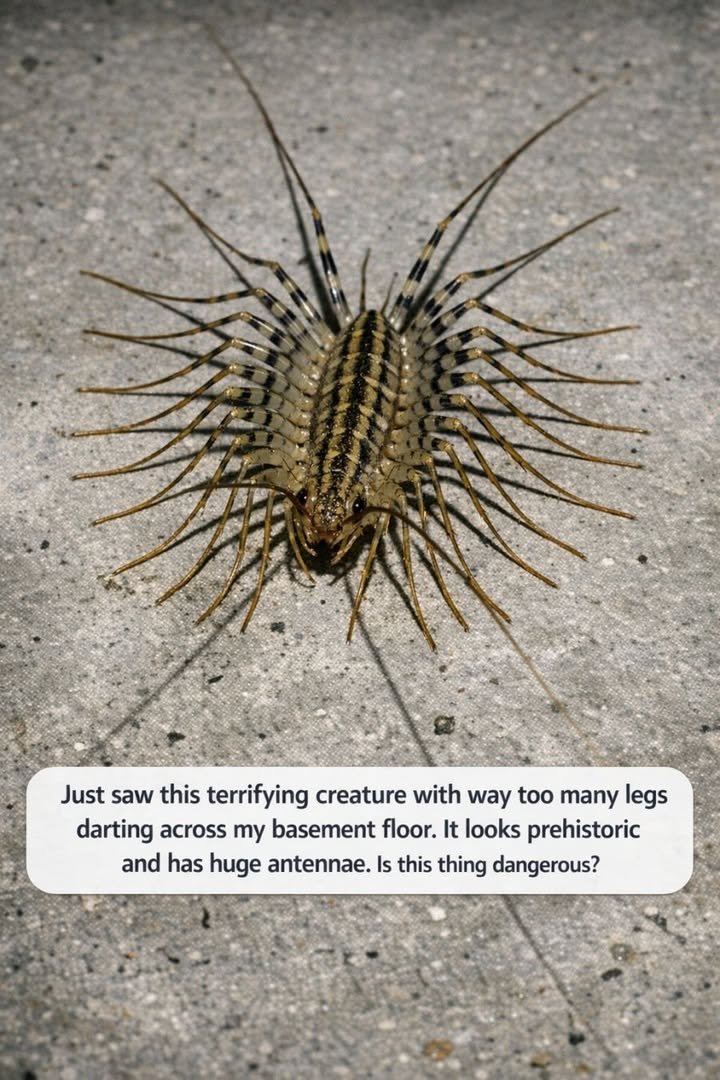
Imagine walking into your basement and catching a glimpse of something that seems to have crawled straight out of a science fiction movie: a creature with an unsettling number of legs, whip-like antennae, and the speed of a sprinter. It darts across the floor and vanishes in the blink of an eye, leaving you startled, intrigued, and maybe a little unsettled.
If this sounds familiar, you’re not alone. Many homeowners have had this exact experience—and the good news is that the creature you saw is almost certainly a house centipede, a fascinating arthropod that’s far more helpful than harmful.
This article isn’t meant to alarm you. It’s here to inform, empower, and guide you with clarity and compassion. Let’s explore what you likely saw, why it looks the way it does, whether it poses any real risk, and how to manage your encounters with this unexpected housemate—without fear.
Cultural Context
Throughout history, creatures with many legs have inspired both fascination and fear. From ancient folklore that cast centipedes as omens to modern horror films that exaggerate their threat, cultural narratives have often painted these arthropods as menacing. Yet in many traditions—from East Asian medicine to Indigenous ecological knowledge—centipedes are respected for their role in natural balance.
Today, as urban living brings us into closer contact with the hidden ecosystems beneath our homes, understanding these creatures becomes less about mythology and more about practical coexistence. This article honors that shift: replacing fear with facts, and curiosity with confidence.
Why This Matters
Reduces unnecessary anxiety: Knowing what you’re dealing with replaces panic with perspective.
Promotes informed action: Understanding behavior and risk helps you respond wisely, not reactively.
Supports ecological awareness: House centipedes are natural pest controllers—recognizing their role fosters appreciation for backyard biodiversity.
Encourages humane solutions: Learning gentle removal methods protects both you and beneficial wildlife.
Builds home literacy: Understanding what lives in your space helps you create a healthier, more balanced environment.
1. What You Probably Saw: Identifying the House Centipede
1. What You Probably Saw: Identifying the House Centipede
The creature you encountered is most likely a house centipede (Scutigera coleoptrata). This arthropod is characterized by:
An elongated, yellowish-gray body up to 1.5 inches (4 cm) long
15 pairs of long, delicate legs that create a distinctive fringed silhouette
An elongated, yellowish-gray body up to 1.5 inches (4 cm) long
15 pairs of long, delicate legs that create a distinctive fringed silhouette
Three subtle dark stripes running along the back
Extremely long, whip-like antennae used for sensing vibrations and navigating darkness
House centipedes are common in urban and suburban homes, especially in basements, bathrooms, and other damp, undisturbed spaces. Despite their startling appearance, they’re a normal part of many household ecosystems.
2. Why It Looks So Terrifying: Legs, Speed, and Antennae Explained
The house centipede’s appearance is undeniably striking—and for good reason. Its many legs move in a rapid, coordinated wave that can seem almost unnatural. But this isn’t for show: those legs enable speeds up to 1.3 feet per second, allowing the centipede to dart, pivot, and escape with astonishing agility.
Its long antennae aren’t decorative—they’re sophisticated sensory tools that detect vibrations, air currents, and chemical cues, helping the centipede hunt and navigate in total darkness. Combined with its lightning-fast movements, these features create an impression of something ancient and alien. In reality, it’s simply a highly adapted predator doing what it evolved to do.
3. Is It Dangerous to Humans or Pets?
Here’s the reassuring truth: house centipedes are generally harmless to humans and pets.
Yes, they possess venom—but it’s designed to subdue tiny prey like spiders and silverfish, not to defend against large animals. Their jaws are too small and weak to easily penetrate human skin. In the exceedingly rare event of a bite, the result is typically mild, localized irritation—comparable to a bee sting—that resolves quickly without medical intervention.
For pets, the risk is similarly minimal. Dogs and cats may show curiosity, but centipedes prefer to flee rather than fight. Still, it’s always wise to monitor interactions between pets and unfamiliar wildlife, just as a general precaution.
4. How Painful Is a House Centipede Bite—and How Common Are They?
Bites on humans are exceedingly rare. House centipedes are not aggressive; they’re evasive. When contact does occur, any discomfort is usually brief: mild redness, slight swelling, and temporary tenderness that fades within hours.
Simple care—like cleaning the area with soap and water or applying a cool compress—is typically all that’s needed. Antiseptic can be used as a precaution, but serious reactions are virtually unheard of.
Most people will never experience a house centipede bite in their lifetime. These creatures are far more interested in hunting smaller insects than in interacting with humans.
5. The Surprising Upside: What House Centipedes Actually Eat
Here’s where the story gets interesting: house centipedes are natural pest controllers.
Their diet includes many of the insects homeowners actually want to eliminate:
Spiders
Cockroaches
Silverfish
Termites
Ants
Bed bugs (in some cases)
By keeping these populations in check, house centipedes play a quiet but valuable role in maintaining a balanced indoor ecosystem. For homeowners dealing with recurring insect issues, a few centipedes might actually be helpful allies—not unwelcome intruders.
6. Why They’re in Your Basement in the First Place
House centipedes seek environments that offer three things: moisture, darkness, and prey.
Basements check all three boxes:
Cool, damp conditions support their hydration needs
Low light mimics their natural habitat
Abundant insect prey provides a reliable food source
You may also find them in bathrooms, closets, utility rooms, or any space that stays relatively undisturbed and humid. As nocturnal hunters, they’re most active at night—which is why you’re more likely to spot them during evening hours.
7. How to Safely Remove a House Centipede If You’re Freaked Out
If you’d prefer not to share your space with a centipede, humane removal is simple:
Stay calm: The centipede is far more interested in escaping than confronting you.
Use the cup-and-card method: Gently place a glass or jar over the centipede, slide a stiff piece of paper underneath, and carry it outside.
Release responsibly: Place it in a shaded, moist area away from your home’s foundation.
Wear gloves if it helps you feel safer—though the risk of a bite is minimal.
Avoid pesticides: They can harm beneficial insects, pets, and the environment, and are rarely necessary for occasional centipede sightings.
8. Simple Home Fixes to Make Centipedes Less Likely to Return
If you’d prefer to discourage centipedes from settling in, focus on making your home less inviting to them—and to their prey:
Reduce humidity: Use a dehumidifier in basements and bathrooms; ensure proper ventilation.
Seal entry points: Fill cracks in walls, floors, and foundations; install door sweeps and repair window screens.
Declutter and clean: Regular vacuuming and reducing stored items eliminates hiding spots for centipedes and the insects they eat.
Address other pests: Controlling cockroaches, silverfish, or spiders reduces the food source that attracts centipedes.
Fix leaks: Repair dripping pipes or condensation issues that create damp microhabitats.
These steps support a healthier home overall—not just fewer centipedes.
9. When to Call Pest Control About Centipedes
Most centipede encounters require no professional intervention. However, consider contacting a pest control expert if:
You notice a significant, persistent infestation (many centipedes appearing regularly)
Your DIY efforts to reduce humidity and seal entry points haven’t helped
You have concerns about other pests that may be attracting them
You prefer targeted, eco-friendly solutions tailored to your home’s specific conditions
A qualified professional can assess entry points, recommend integrated pest management strategies, and help address underlying factors contributing to the issue.
10. Myths, Misconceptions, and Viral Horror Stories Debunked
House centipedes have earned an outsized reputation for danger—largely due to their appearance and viral misinformation.
Myth: They’re poisonous to humans.
Fact: Their venom is specialized for tiny prey and poses no meaningful threat to people.
Myth: They crawl into ears or mouths while you sleep.
Fact: Centipedes avoid large, warm-bodied animals. There’s no evidence they seek out humans for shelter.
Myth: Seeing one means your home is dirty or infested.
Fact: Centipedes appear in clean, well-maintained homes too—they’re drawn to moisture and prey, not mess.
Viral images and exaggerated stories amplify fear, but the reality is far less dramatic. These creatures are more beneficial than harmful, helping to control populations of insects that genuinely cause problems.
Frequently Asked Questions
Q: Can house centipedes climb walls or ceilings?
A: Yes. Their many legs and lightweight bodies allow them to scale vertical surfaces with ease. This is normal behavior, not a sign of aggression.
Q: Do they reproduce quickly indoors?
A: House centipedes can lay eggs indoors, but they require specific humidity and prey conditions to thrive. Most indoor sightings are individual hunters, not signs of a breeding population.
Q: Will killing one attract more?
A: No. Centipedes don’t release pheromones that draw others. However, if the conditions that attracted the first one remain (moisture, prey), others may find their way in.
Q: Are there look-alikes I should worry about?
A: Some millipedes or large insects may resemble centipedes at a glance. Key differences: millipedes have two pairs of legs per body segment and move slowly; centipedes have one pair per segment and move very fast. Neither is typically dangerous.
Q: Can I prevent them without chemicals?
A: Absolutely. Focus on moisture control, sealing entry points, and reducing other pests—the most effective, eco-friendly prevention strategies.
Important Considerations: Safety & Perspective
This article is for informational purposes only and is not a substitute for professional pest management or medical advice.
Individual reactions vary: While bites are rare and mild, anyone with known insect venom sensitivities should exercise caution and consult a healthcare provider if concerned.
Pets and wildlife: Monitor interactions between pets and unfamiliar creatures, and avoid using harsh chemicals that could harm animals or the environment.
Ecological balance: Removing all insects from your home isn’t always desirable—or possible. Aim for balance, not eradication.
When in doubt, seek expertise: If you’re unsure about an insect’s identity or have concerns about infestations, consult a local extension service or licensed pest professional.
That startling glimpse of a many-legged creature darting across your basement floor doesn’t have to end in fear. More often than not, you’ve simply met a house centipede—a quiet, efficient predator that’s been managing your home’s smaller pests long before you noticed.
Understanding what you saw transforms the unknown into the knowable. It replaces anxiety with awareness, and reaction with choice. Whether you decide to coexist with these helpful hunters or gently encourage them to find a new home, you’re now equipped to respond with knowledge, not panic.
If this article brought you clarity or calm, I’d love to hear from you. Did you spot a house centipede? How did you handle it? Share your story below. And if you know someone who’s been startled by a basement visitor, please pass this along.
Sometimes the greatest gift we can offer is the quiet reminder:
The hidden worlds in our homes aren’t threats to fear—they’re ecosystems to understand.
1. What You Probably Saw: Identifying the House Centipede
The creature you encountered is most likely a house centipede (Scutigera coleoptrata). This arthropod is characterized by:
An elongated, yellowish-gray body up to 1.5 inches (4 cm) long
15 pairs of long, delicate legs that create a distinctive fringed silhouette
An elongated, yellowish-gray body up to 1.5 inches (4 cm) long
15 pairs of long, delicate legs that create a distinctive fringed silhouette
Three subtle dark stripes running along the back
Extremely long, whip-like antennae used for sensing vibrations and navigating darkness
House centipedes are common in urban and suburban homes, especially in basements, bathrooms, and other damp, undisturbed spaces. Despite their startling appearance, they’re a normal part of many household ecosystems.
2. Why It Looks So Terrifying: Legs, Speed, and Antennae Explained
The house centipede’s appearance is undeniably striking—and for good reason. Its many legs move in a rapid, coordinated wave that can seem almost unnatural. But this isn’t for show: those legs enable speeds up to 1.3 feet per second, allowing the centipede to dart, pivot, and escape with astonishing agility.
Its long antennae aren’t decorative—they’re sophisticated sensory tools that detect vibrations, air currents, and chemical cues, helping the centipede hunt and navigate in total darkness. Combined with its lightning-fast movements, these features create an impression of something ancient and alien. In reality, it’s simply a highly adapted predator doing what it evolved to do.
3. Is It Dangerous to Humans or Pets?
Here’s the reassuring truth: house centipedes are generally harmless to humans and pets.
Yes, they possess venom—but it’s designed to subdue tiny prey like spiders and silverfish, not to defend against large animals. Their jaws are too small and weak to easily penetrate human skin. In the exceedingly rare event of a bite, the result is typically mild, localized irritation—comparable to a bee sting—that resolves quickly without medical intervention.
For pets, the risk is similarly minimal. Dogs and cats may show curiosity, but centipedes prefer to flee rather than fight. Still, it’s always wise to monitor interactions between pets and unfamiliar wildlife, just as a general precaution.
4. How Painful Is a House Centipede Bite—and How Common Are They?
Bites on humans are exceedingly rare. House centipedes are not aggressive; they’re evasive. When contact does occur, any discomfort is usually brief: mild redness, slight swelling, and temporary tenderness that fades within hours.
Simple care—like cleaning the area with soap and water or applying a cool compress—is typically all that’s needed. Antiseptic can be used as a precaution, but serious reactions are virtually unheard of.
Most people will never experience a house centipede bite in their lifetime. These creatures are far more interested in hunting smaller insects than in interacting with humans.
5. The Surprising Upside: What House Centipedes Actually Eat
Here’s where the story gets interesting: house centipedes are natural pest controllers.
Their diet includes many of the insects homeowners actually want to eliminate:
Spiders
Cockroaches
Silverfish
Termites
Ants
Bed bugs (in some cases)
By keeping these populations in check, house centipedes play a quiet but valuable role in maintaining a balanced indoor ecosystem. For homeowners dealing with recurring insect issues, a few centipedes might actually be helpful allies—not unwelcome intruders.
6. Why They’re in Your Basement in the First Place
House centipedes seek environments that offer three things: moisture, darkness, and prey.
Basements check all three boxes:
Cool, damp conditions support their hydration needs
Low light mimics their natural habitat
Abundant insect prey provides a reliable food source
You may also find them in bathrooms, closets, utility rooms, or any space that stays relatively undisturbed and humid. As nocturnal hunters, they’re most active at night—which is why you’re more likely to spot them during evening hours.
7. How to Safely Remove a House Centipede If You’re Freaked Out
If you’d prefer not to share your space with a centipede, humane removal is simple:
Stay calm: The centipede is far more interested in escaping than confronting you.
Use the cup-and-card method: Gently place a glass or jar over the centipede, slide a stiff piece of paper underneath, and carry it outside.
Release responsibly: Place it in a shaded, moist area away from your home’s foundation.
Wear gloves if it helps you feel safer—though the risk of a bite is minimal.
Avoid pesticides: They can harm beneficial insects, pets, and the environment, and are rarely necessary for occasional centipede sightings.
8. Simple Home Fixes to Make Centipedes Less Likely to Return
If you’d prefer to discourage centipedes from settling in, focus on making your home less inviting to them—and to their prey:
Reduce humidity: Use a dehumidifier in basements and bathrooms; ensure proper ventilation.
Seal entry points: Fill cracks in walls, floors, and foundations; install door sweeps and repair window screens.
Declutter and clean: Regular vacuuming and reducing stored items eliminates hiding spots for centipedes and the insects they eat.
Address other pests: Controlling cockroaches, silverfish, or spiders reduces the food source that attracts centipedes.
Fix leaks: Repair dripping pipes or condensation issues that create damp microhabitats.
These steps support a healthier home overall—not just fewer centipedes.
9. When to Call Pest Control About Centipedes
Most centipede encounters require no professional intervention. However, consider contacting a pest control expert if:
You notice a significant, persistent infestation (many centipedes appearing regularly)
Your DIY efforts to reduce humidity and seal entry points haven’t helped
You have concerns about other pests that may be attracting them
You prefer targeted, eco-friendly solutions tailored to your home’s specific conditions
A qualified professional can assess entry points, recommend integrated pest management strategies, and help address underlying factors contributing to the issue.
10. Myths, Misconceptions, and Viral Horror Stories Debunked
House centipedes have earned an outsized reputation for danger—largely due to their appearance and viral misinformation.
Myth: They’re poisonous to humans.
Fact: Their venom is specialized for tiny prey and poses no meaningful threat to people.
Myth: They crawl into ears or mouths while you sleep.
Fact: Centipedes avoid large, warm-bodied animals. There’s no evidence they seek out humans for shelter.
Myth: Seeing one means your home is dirty or infested.
Fact: Centipedes appear in clean, well-maintained homes too—they’re drawn to moisture and prey, not mess.
Viral images and exaggerated stories amplify fear, but the reality is far less dramatic. These creatures are more beneficial than harmful, helping to control populations of insects that genuinely cause problems.
Frequently Asked Questions
Q: Can house centipedes climb walls or ceilings?
A: Yes. Their many legs and lightweight bodies allow them to scale vertical surfaces with ease. This is normal behavior, not a sign of aggression.
Q: Do they reproduce quickly indoors?
A: House centipedes can lay eggs indoors, but they require specific humidity and prey conditions to thrive. Most indoor sightings are individual hunters, not signs of a breeding population.
Q: Will killing one attract more?
A: No. Centipedes don’t release pheromones that draw others. However, if the conditions that attracted the first one remain (moisture, prey), others may find their way in.
Q: Are there look-alikes I should worry about?
A: Some millipedes or large insects may resemble centipedes at a glance. Key differences: millipedes have two pairs of legs per body segment and move slowly; centipedes have one pair per segment and move very fast. Neither is typically dangerous.
Q: Can I prevent them without chemicals?
A: Absolutely. Focus on moisture control, sealing entry points, and reducing other pests—the most effective, eco-friendly prevention strategies.
Important Considerations: Safety & Perspective
This article is for informational purposes only and is not a substitute for professional pest management or medical advice.
Individual reactions vary: While bites are rare and mild, anyone with known insect venom sensitivities should exercise caution and consult a healthcare provider if concerned.
Pets and wildlife: Monitor interactions between pets and unfamiliar creatures, and avoid using harsh chemicals that could harm animals or the environment.
Ecological balance: Removing all insects from your home isn’t always desirable—or possible. Aim for balance, not eradication.
When in doubt, seek expertise: If you’re unsure about an insect’s identity or have concerns about infestations, consult a local extension service or licensed pest professional.
That startling glimpse of a many-legged creature darting across your basement floor doesn’t have to end in fear. More often than not, you’ve simply met a house centipede—a quiet, efficient predator that’s been managing your home’s smaller pests long before you noticed.
Understanding what you saw transforms the unknown into the knowable. It replaces anxiety with awareness, and reaction with choice. Whether you decide to coexist with these helpful hunters or gently encourage them to find a new home, you’re now equipped to respond with knowledge, not panic.
If this article brought you clarity or calm, I’d love to hear from you. Did you spot a house centipede? How did you handle it? Share your story below. And if you know someone who’s been startled by a basement visitor, please pass this along.
Sometimes the greatest gift we can offer is the quiet reminder: