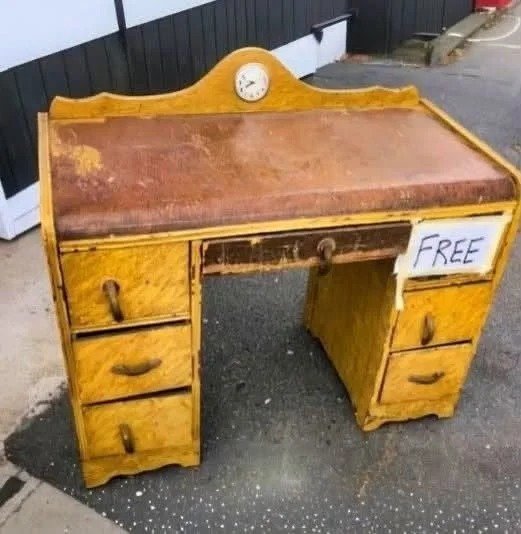
The dressing table was discarded, scratched, painted over, and labeled “Free.” Shoppers walked past, assuming it was beyond repair.
Ross Taylor, however, stopped and took a closer look, sensing potential beneath the layers of yellow paint.
He didn’t just rescue the piece—he resurrected it. Taylor stripped away the paint, repaired battered drawers, and rebuilt missing elements with care.
Each layer removed revealed the original wood grain, elegant lines, and the quiet dignity of the Art Deco design hidden beneath.
Taylor treated the table with the precision of a museum conservator, transforming what was once ignored into something remarkable.
By the time he finished, the table gleamed with a deep walnut body, warm mahogany drawers, and a presence that demanded attention.
The video of his restoration went viral, resonating beyond furniture enthusiasts. It became a symbol of hope that discarded or overlooked things can be valuable with patience and care.
In Taylor’s hands, an abandoned dressing table became a quiet manifesto: true worth isn’t always visible at first glance—it sometimes has to be carefully revealed.
The Ticking Time Bomb in Your Veins: Why Your Hands Could Be Warning You of a Hidden Crisis
You glance at your hands and suddenly notice bulging, blue veins. At first, it’s easy to blame aging, exercise, or heat—but sometimes, changes like this deserve closer attention.
In many cases, visible veins are completely normal. Genetics, low body fat, hydration, and skin tone all affect how prominent they appear.
As we age, skin becomes thinner and loses elasticity. This naturally makes veins more noticeable, along with tendons and bones.
However, the body often signals when something isn’t right. A gradual change over time is usually harmless, but sudden or unusual changes can mean more.
If a vein becomes hard, painful, or warm to the touch, it may indicate inflammation or a developing clot. These symptoms should not be ignored.
Swelling or veins that remain enlarged without a clear reason can also point to circulation issues. The circulatory system is connected, so small signs can reflect bigger problems.
Instead of panicking, it’s important to observe carefully. Notice when changes happen, what triggers them, and whether they improve with rest or elevation.