Continued on next page
Continued on next page
Increased heart rate
Excessive sweating
Restlessness and discomfort
Difficulty reaching deep sleep stages
Frequent waking during the night
Because of this, even small reductions in temperature or perceived heat can significantly improve sleep quality.
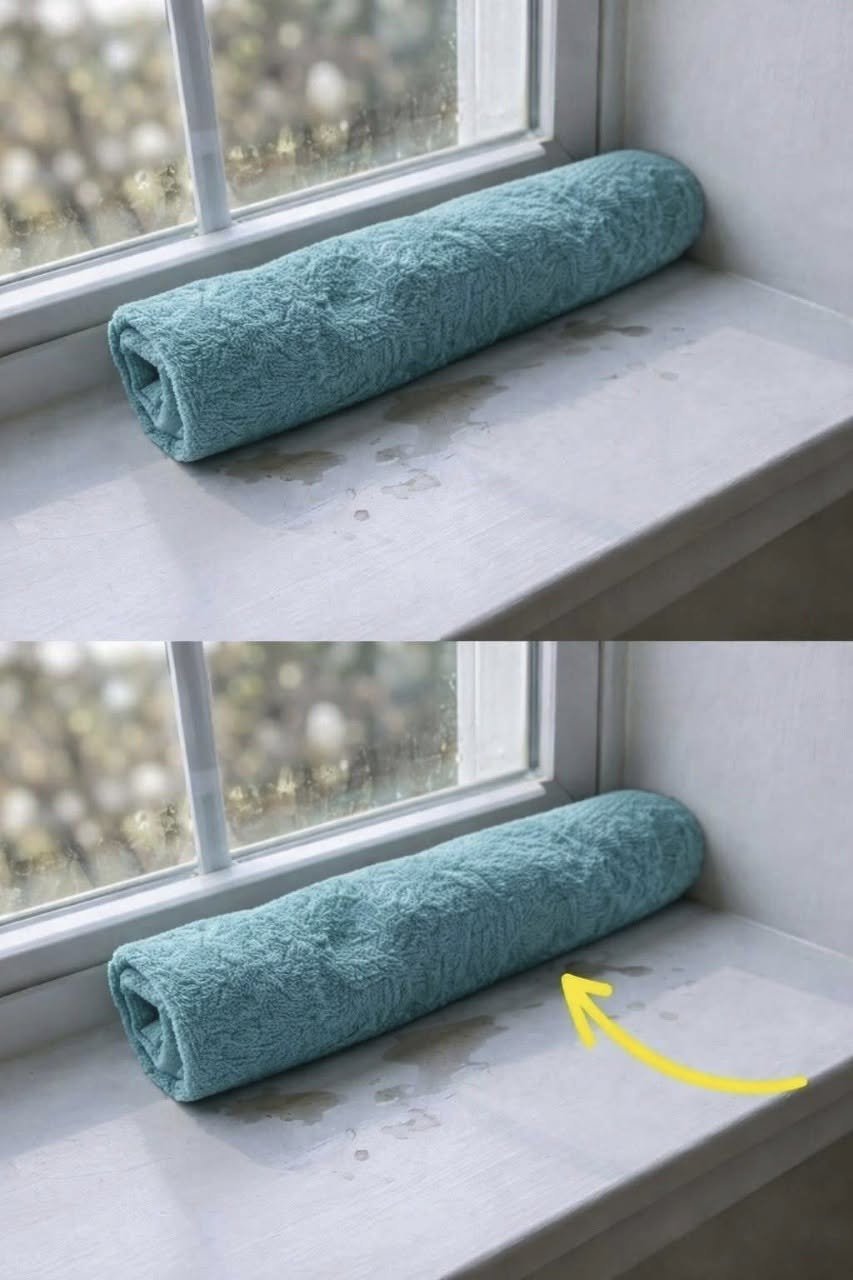
Technique 1: Using a Wet Towel for Natural Air Cooling
One low-energy method for improving bedroom airflow involves placing a damp towel near an open window or ventilation point.
This method works through a natural physical process known as evaporative cooling.
How Evaporative Cooling Works
When water evaporates, it absorbs heat energy from its surroundings. This process cools the surrounding air slightly as moisture transitions from liquid to vapor.
By positioning a wet towel where air enters a room, the incoming air passes through or around the damp fabric. As the water evaporates, it draws heat from the air, creating a mild cooling effect.
Although this does not function like an air conditioner, it can:
Reduce perceived room temperature slightly
Add moisture to overly dry air
Improve airflow comfort
Create a more breathable sleeping environment
Even small changes in airflow temperature can make a noticeable difference when trying to fall asleep.
Practical Ways to Use a Wet Towel
To maximize the effectiveness of this method, the towel should be used strategically:
Hang it near an open window or airflow path
Ensure air can pass through or around it
Keep it damp, not dripping wet
Replace or re-wet it if it dries out during the night
This technique works best in environments where air circulation is already present, such as rooms with open windows or fans.
Limitations of the Wet Towel Method
While useful, this method has limitations:
It provides only mild cooling, not temperature control
It is less effective in humid climates where evaporation slows down
It may require frequent re-wetting in dry environments
Despite these limitations, it remains a helpful passive cooling strategy for improving comfort without electricity.
Technique 2: Chilling a Pillowcase for Direct Body Cooling
The second method focuses not on the room, but on the body itself. Cooling the body’s head and neck area can help signal relaxation and support the sleep process.
This is done by placing a pillowcase in a refrigerator or freezer for a short time before bed.
Continued on next page

Heartbreaking news. A true legend has passed away. When you see him, tears will well up... First comment: I'll tell you about this legend 😭💬👇🏻

10 signs of resentment from a son towards his motherCheck the first comment to see the signs and how to avoid them so your child doesn't get upset with you 💬👇🏻

I married a blind man so he would never see my scars — but on our wedding night, he told me, "You have to know the truth I've been hiding for 20 years."

A biker came to my wife's grave every week, and for months, I had no idea who he was. For six months, I watched him from inside my car. Same day. Same time. Every Saturday at 2 p.m., he would ride his Harley to the cemetery, park near the old oak tree, and walk straight to Emily's headstone. Then he would sit by her grave for an hour. He never brought flowers. I never left a note. I never spoke loudly enough for her to hear. He would just sit cross-legged on the grass, his head bowed, as if he were carrying a pain too heavy to stand. The first time I saw him, I thought I had made a mistake. It was a big cemetery. Graves can easily get confused. But then he came back the following Saturday. And the Saturday after that. And again after that. Week after week, this stranger mourned my wife as if she belonged to him too. At first, I was confused. Then I got angry. Who was he? How did he know Emily? Why did this man show up for her every week, when some of her family barely showed up? Emily had died fourteen months earlier of breast cancer. She was only forty-three years old. We had been married for twenty years. Two children. A quiet home. A normal life. At least, that’s what I thought. Nothing in my wife’s life made sense with this man. Emily was a pediatric nurse. She volunteered at church. She drove a silver minivan and packed snacks for every school event. Her idea of breaking the rules was to order dessert before dinner. But this biker pitied her as if she had lost someone irreplaceable. Sometimes, from my car, I could see his shoulders shaking. Sometimes, before he left, he would place a hard hand on her gravestone and hold it there for several seconds. As if he were saying goodbye to her again. By the third month, I couldn’t take it anymore. That Saturday, I got out of my car and walked toward him. He heard my footsteps, but he didn’t turn around. His hand remained pressed against Emily’s name. “Excuse me,” I said, my voice clearer than I intended. “I’m Emily’s husband. I think it’s time you told me who you are.” For a long moment, he said nothing. Then he stood up slowly, turned to look at me, and looked like a man who had been waiting six months for this question. Finally, he said, Type “0503” and press “Like” to see the full story. A MOTORCYCLE SHOWED UP AT MY WIFE’S GRAVE EVERY WEEK, AND FOR MONTHS, I HAD NO IDEA WHO IT WAS. ___ For six months, I watched him from inside my car. Same day. Same time. Every Saturday at 2 p.m., he would ride his Harley to the cemetery, parking near the old oak tree and walking straight to Emily’s headstone. Then he would sit by her grave for an hour. He never brought flowers. I never left a note. I never spoke loudly enough for me to hear. He would just sit cross-legged on the grass, his head bowed, as if he were carrying a pain too heavy to stand. The first time I saw him, I thought I had made a mistake. It was a big cemetery. The graves can be easily confused. But then he came back the next Saturday. And the Saturday after that. And the Saturday after that. Week after week, this stranger mourned my wife as if she belonged to him too. At first, I was confused. Then I got angry. Who was he? How did he know Emily? Why did this man show up for her every week, when some of her family members barely showed up? Emily had died fourteen months earlier of breast cancer. He was only forty-three. We had been married for twenty years. Two children. A quiet home. A normal life. At least, that’s what I thought. Nothing in my wife’s life made sense with this man. Emily was a pediatric nurse. A volunteer at church. He drove a silver minivan and packed snacks for every school event. Her idea of breaking the rules was ordering dessert before dinner. But this biker felt sorry for her as if she had lost someone irreplaceable. Sometimes, from my car, I could see her shoulders shaking. Sometimes, before she left, she would place a hard hand on her gravestone and hold it there for several seconds. As if saying goodbye again. By the third month, I couldn’t take it anymore. That Saturday, I got out of my car and walked toward him. He heard my footsteps, but he didn’t turn around. His hand remained pressed against Emily’s name. “I’m sorry,” I said, my voice sharper than I intended. “I’m Emily’s husband. I think it’s time you told me who you are.” For a long moment, he said nothing. Then he stood up slowly, turned to me, and looked like a man who had been waiting six months for
Only Legends Know What This Really Is: The Nostalgic History of the Vintage Postal Scale (And Why We Still Love Them)Leave a comment to learn more about this device and why we still love it 👇🏻💬